
PVC – a Thermoplastic
Plastics are divided into two broad categories:
- Thermoplastics (e.g. PVC, PE, PP, PS) – can be softened by heat and reshaped repeatedly.
- Thermosets (e.g. phenolic resin, melamine) – once hardened, they cannot be reshaped.
PVC belongs to the thermoplastics family. It is made of about 57% chlorine (from salt) and 43% carbon (from oil or gas via ethylene). Bio-attributed and bio-circular PVC resins are also available (mass balance). Because of this high chlorine content, PVC uses less fossil raw material than most other major plastics, making it a resource-efficient choice.
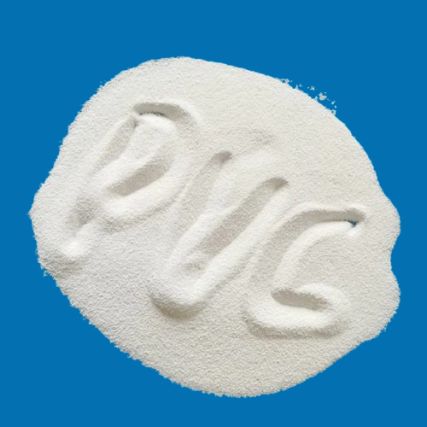
PVC resin is usually supplied in powder form, which is stable for long storage. During processing, it is mixed with additives — all strictly regulated under REACH, the world’s most stringent chemical safety framework — to create tailor-made compounds that can be processed by common plastic converting technologies.
PVC can also be processed as plastisols – liquid dispersions of PVC in plasticisers. When heated, they fuse into a solid, making them ideal for coatings, wall coverings, gloves, artificial leather, and some flooring applications.
In Europe, vinyl is often used for flexible applications, while PVC is the standard technical name.
Where is PVC Used?
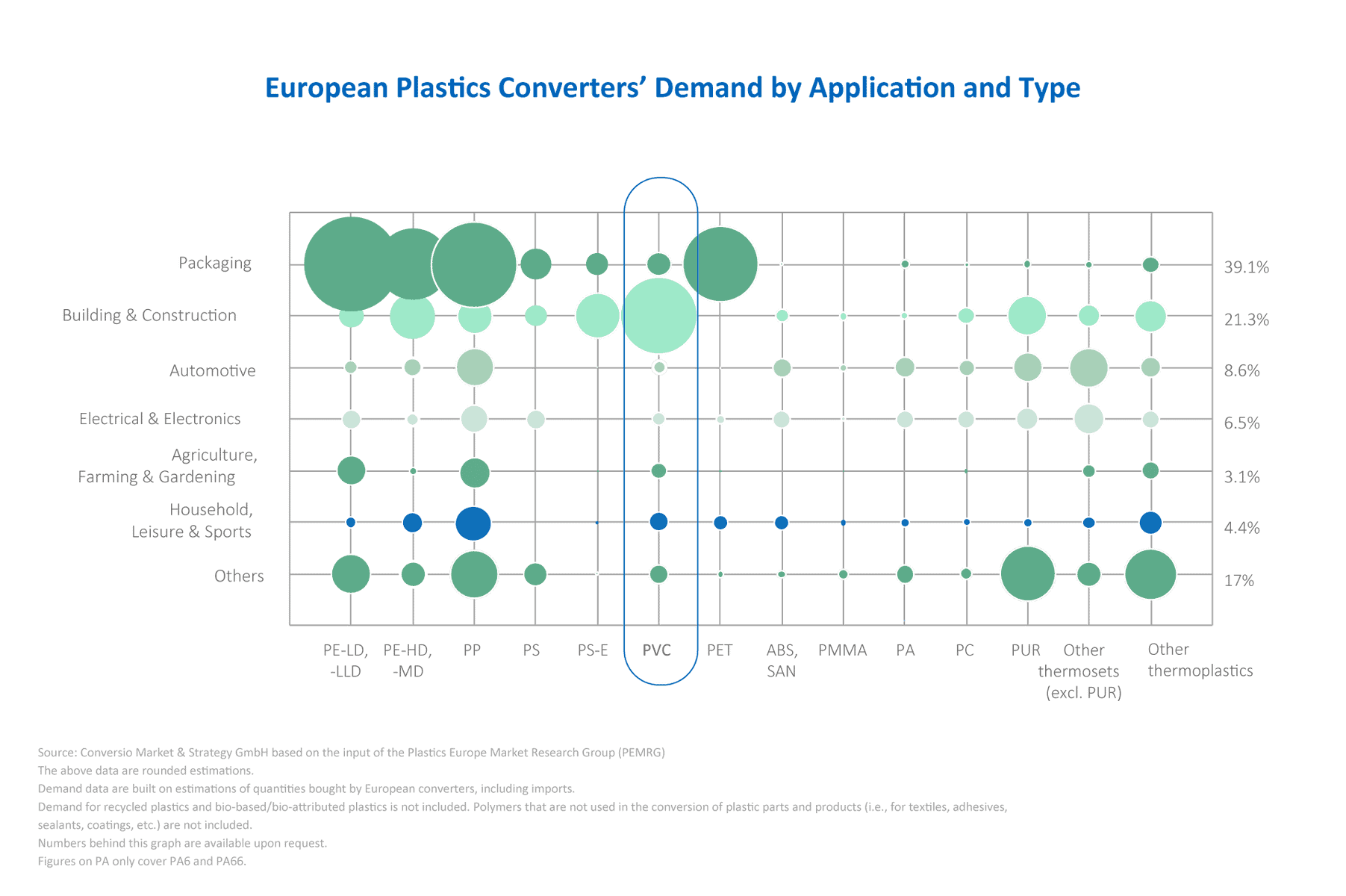
PVC is the third most widely used plastic in the world, after polyethylene (PE) and polypropylene (PP).
Major applications:
- Building & Construction – pipes, windows, cables, flooring, roofing, cladding.
- Healthcare – blood bags, tubing, masks, pharmaceutical blister packaging.
- Transport – automotive interiors, cables, hoses, tarpaulins.
- Energy & Infrastructure – power cables, ducts, hydrogen and water pipelines, wind turbine blades (PVC foam).
- Agriculture – irrigation pipes, greenhouse films, flooring for stables.
- Leisure & consumer goods – sports equipment, furniture, records, fashion, advertising banners, inflatable structures.
A brief history of PVC
1872First discovery
Eugen Baumann (Germany) accidentally produces PVC by exposing vinyl chloride to sunlight.1913Early patent
Dr. Fritz Klatte (Germany) patents a process to produce PVC, but the material proves difficult to work with and is not commercialised.1920sFirst applications
Waldo Semon (USA, BF Goodrich) develops PVC as a coating for fabrics. Commercial products soon follow, especially in waterproof materials.1940sWar-time uses
During World War II, PVC replaces scarce natural rubber as insulation for ship wiring and military equipment.1950-todayExpansion and everyday use
PVC became a global material, moving from niche uses into construction, healthcare, energy, and consumer products. Pipes, windows, cables, flooring, and medical devices made PVC indispensable in modern life. Today, it remains one of the world’s top three commodity plastics.2025-Circular and towards zero-carbon
PVC is entering a new phase driven by the circular economy and climate goals. Bio-attributed and bio-circular resins (mass balance), innovative additives, and advanced recycling technologies are being scaled up. PVC will continue to provide safe, durable, and recyclable solutions for healthcare, infrastructure, and clean energy systems.