Operational Experience Across the PVC Industry
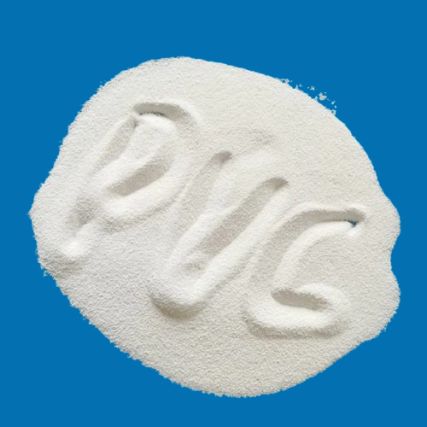
PVC powder is widely handled across production, storage, and conversion processes. Based on extensive industry experience and technical assessment, the risk of dust explosion from PVC is extremely low when appropriate measures are applied.
No explosion incidents have been reported in relevant PVC production operations such as drying, storage, packaging, transport, or handling within ECVM member companies.
Understanding the Risk
Like all organic materials, PVC is combustible. However, its ignition characteristics mean that significantly higher energy is required to trigger an explosion compared to many other dusts.
PVC dust is classified below the lowest explosion risk category, requiring high ignition energy and temperature to ignite.
This means that, under normal industrial conditions, the formation of explosive atmospheres is unlikely.
Application of ATEX Directive 1999/92/EC
Even though the risk is very low, a risk assessment remains essential whenever PVC powder handling may generate dust clouds.
Where it cannot be fully excluded that dispersed dust clouds may form, the principles of Directive 1999/92/EC should be applied.
However, when appropriate preventive measures are implemented, it is possible to justify:
- Use of non-ATEX compliant equipment
- Absence of protective systems in classified zones
This must always be documented through a formal risk assessment and included in the explosion protection documentation.
Key Prevention Measures
Simple and well-established measures are sufficient to effectively avoid any explosion risk:
Installation design
- Proper grounding of all equipment to prevent electrostatic charge
- Avoidance of non-conductive components without continuity control
- Elimination of ignition sources such as hot surfaces or open flames
Protection against lightning
Operational procedures
- Minimising dust cloud formation during handling and mixing
- Maintaining good housekeeping to prevent dust accumulation
- Regular inspection of moving parts to avoid overheating
- Use of work permits and control of ignition sources during maintenance
Important Considerations
These conclusions apply to pure PVC powder in air.
When PVC is mixed with additives or other substances, explosion characteristics may change. In such cases, a separate risk assessment is required, and responsibility lies with the operator.
Supporting Data
Laboratory testing confirms the low ignition sensitivity of PVC dust, including:
- Minimum ignition energy above 1000 mJ
- Ignition temperatures above 500°C
- Low explosion class (St 0–1 depending on conditions)
(see Appendix in the full document)
Download the Full Statement
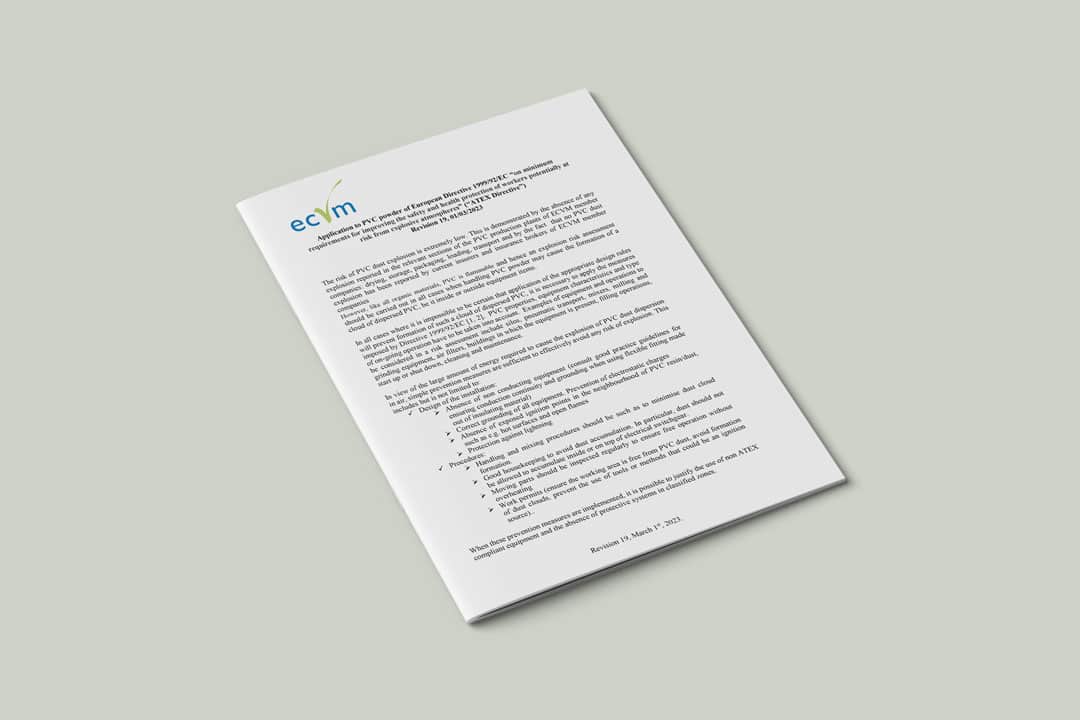
For full technical details and regulatory context, download the ECVM statement: