Polyvinyl chloride, known as PVC or vinyl, is used in everything from blood bags to sewer pipes – but it begins as a white powder called PVC resin.
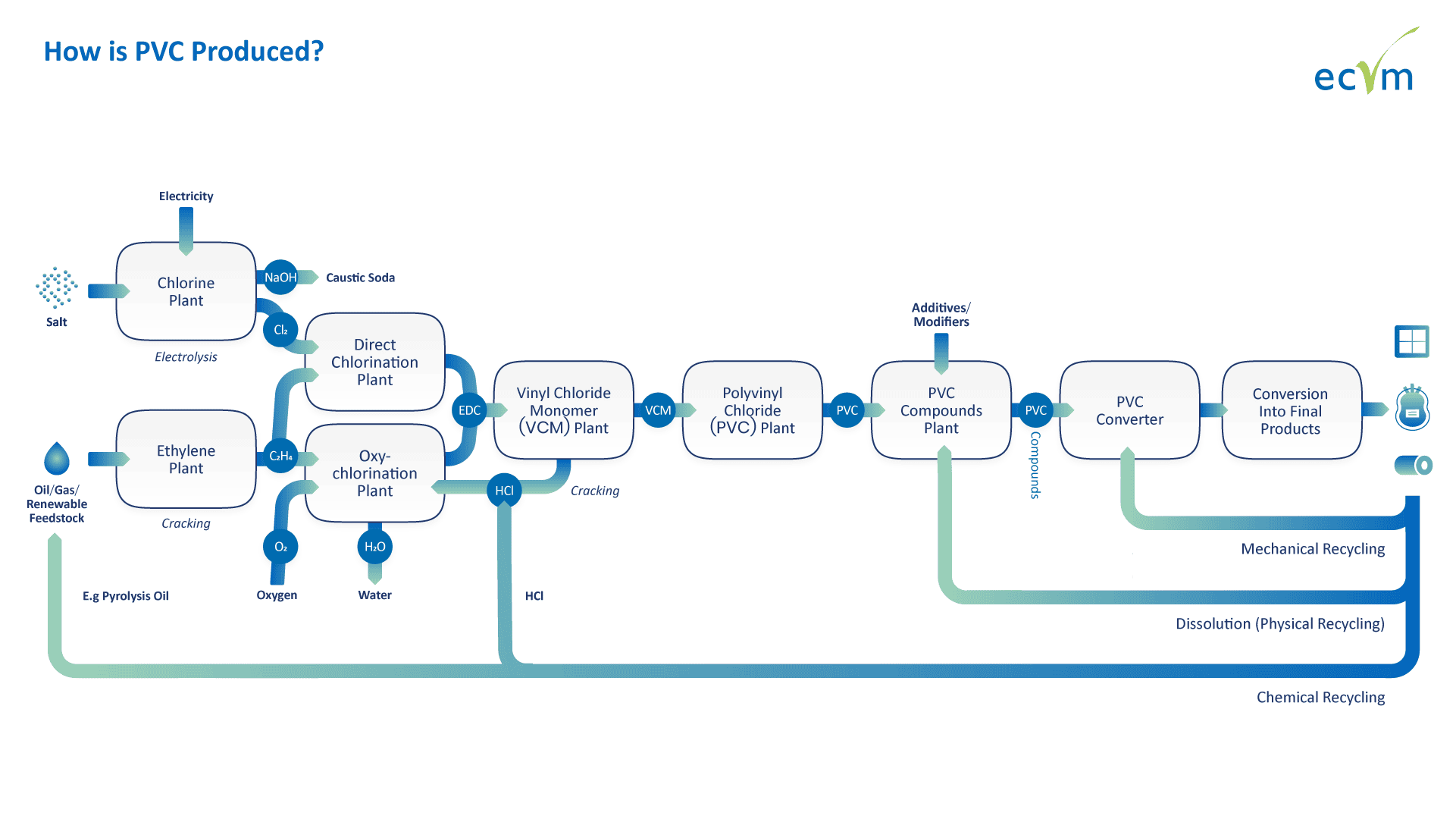
PVC resin is produced from chlorine (from common salt) and ethylene (from oil or gas). Ethylene can also come from renewable resources, and bio-attributed and bio-circular PVC resins are already on the market (mass balance approach). Thanks to its high chlorine content, PVC requires less energy and has a lower CO₂ footprint than other materials.
PVC Production Process – Step by Step
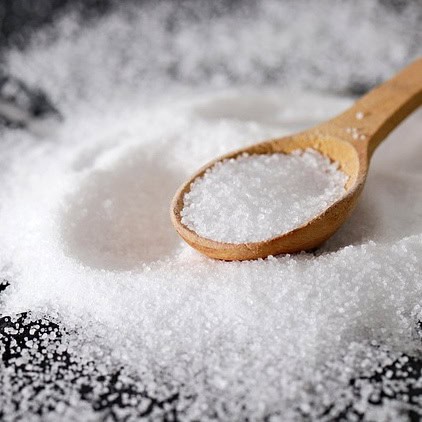
Salt Becomes Chlorine
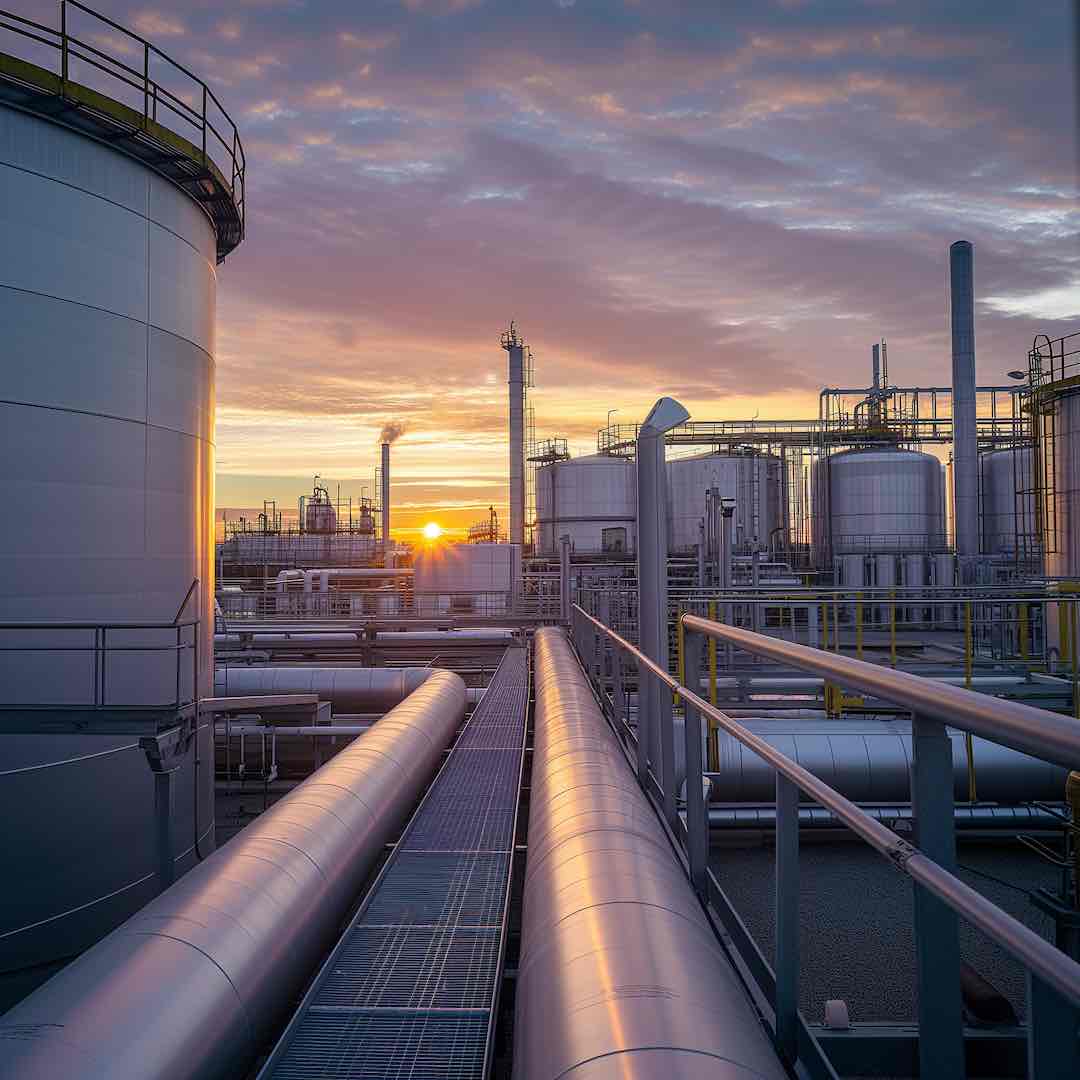
Chlorine and Ethylene Form Ethylene Dichloride (EDC)
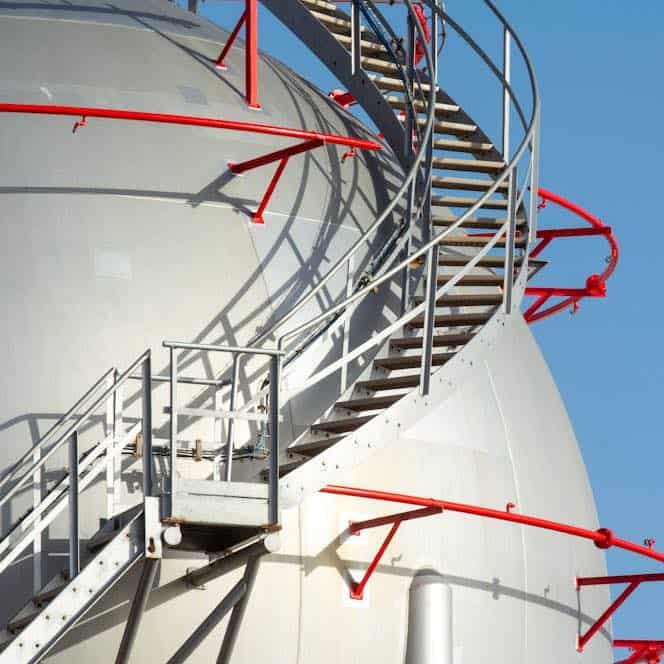
EDC Becomes Vinyl Chloride Monomer (VCM)
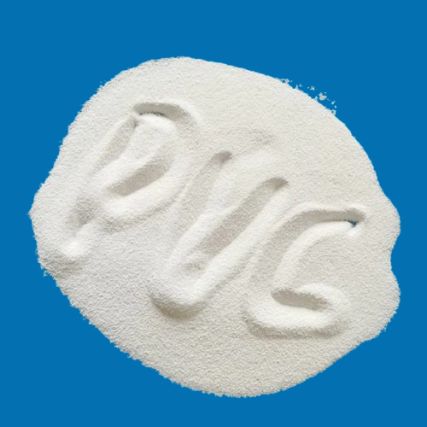
VCM Becomes PVC Resin
From PVC Resin to Final Product
PVC resin cannot be used on its own. It is first mixed with additives in carefully designed formulations, then processed into durable products for construction, healthcare, energy, and more. See below how PVC moves from resin to finished applications – and back again through recycling.
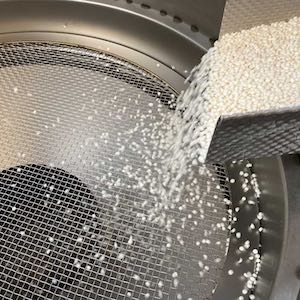
Compounding – Defining the Recipe
PVC is the plastic with the widest range of applications – from rigid pipes and roofing membranes to ultra-flexible medical tubing and cable insulation. This versatility comes from compounding: mixing PVC resin with carefully chosen additives in controlled recipes, called formulations.
Additives may include stabilisers, plasticisers, pigments, foaming agents, UV filters and more. Around 500 different additives can be used in various safe combinations depending on the function. All additives used in Europe are regulated under REACH, the world’s strictest chemical safety framework.
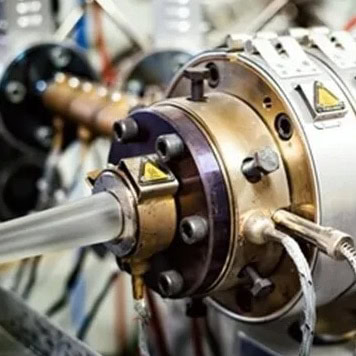
Processing – Shaping Compounds Into Products
Once compounded, PVC is transformed by plastics processors into finished products through industrial techniques.
Extrusion: the most common process, used for pipes, cables, profiles.
Injection moulding: for fittings and technical components.
Rotational moulding: for buoys, fenders and hollow products.
Thermoforming and calendaring: for films, sheets and flooring.
Because PVC is a thermoplastic, it can be softened by heat, shaped, cooled, and reprocessed multiple times – the same property that makes it recyclable.

Use – Meeting Societal Needs
PVC compounds are processed into thousands of everyday products, from pipes and windows to blood bags and cables. Around 70% goes into construction, while the rest is used in healthcare, transport, electronics, and more.
All modern PVC products meet strict EU requirements for health and safety, including REACH, the Medical Devices Regulation (MDR), the Toy Safety Directive, Food Contact Materials (FCM) regulation, and the Construction Products Regulation (CPR).
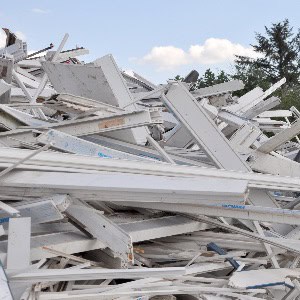
Recycling – Part of the Circular Economy
PVC is a thermoplastic, meaning it can be shredded, reheated, and remoulded into new products after use.
Studies show rigid PVC can be recycled mechanically up to 10 times and flexible PVC 6 to 11 times without significant loss of performance.
This resilience is due to PVC’s strong chlorine-based polymer chains, which withstand repeated heating and processing.
Recycling is central to the VinylPlus commitment, which has already recycled 9.5 million tonnes of PVC across Europe since 2000.
Advanced recycling technologies are also available for waste that cannot be recycled mechanically.
European Chemicals Agency Confirms Safety of European PVC Production
In Europe, strict regulations exist to protect workers and the environment. Additionally, the safe handling of EDC and VCM is part of the voluntary charter that ECVM's members have signed up to, and plants undergo regular third-party audits to verify compliance with legislative requirements.
Emissions limit values are set based on Best Available Techniques of the Industrial Emissions Directive. For these reasons, ECHA (the European Chemicals Agency) has concluded in its Investigation Report on PVC and its additives that “the operational conditions and risk management measures implemented in the VCM/PVC industry are adequate and effective to control the risk for workers from EDC and VCM,” and that “the levels of residual ECD/VCM in PVC articles seem to be appropriately controlled in Europe.”
Beyond EDC and VCM, the PVC industry also controls the emission of other chemicals: there are no relevant emissions of chloroform, hexachlorobutadiene, or PCBs from European VCM plants. VCM plants do not use or emit any CCl4. The emissions of dioxins and furans are regulated by the Industrial Emissions Directive, and dioxin/furans emission data are collected yearly by ECVM, showing a constant downward trend.

"The operational conditions and risk management measures implemented in the VCM/PVC industry are adequate and effective to control the risk for workers from EDC and VCM."
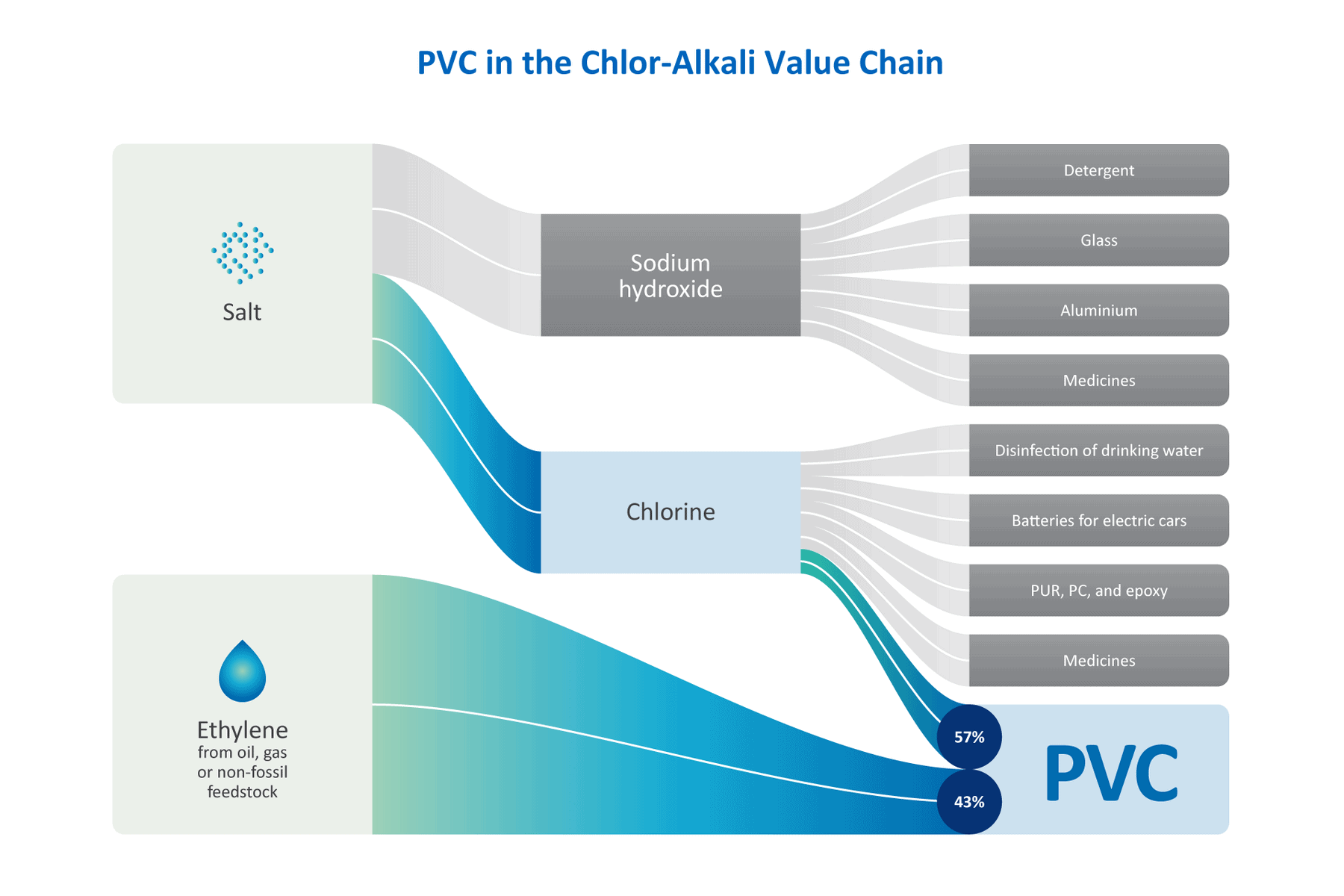
PVC in the Chlor-alkali Value Chain
PVC is an integral part of the chlor-alkali industry, one of Europe’s most important basic chemical sectors.
When common salt (NaCl) undergoes electrolysis, it produces three essential substances:
- Chlorine (Cl) – used in PVC, but also in other plastics such as polyurethanes (PUR), epoxy resins, and polycarbonates (PC). Beyond plastics, chlorine chemistry is indispensable for healthcare – up to 90% of all medicines depend on chlorine chemistry at some stage of their manufacture. It is also vital for disinfectants, batteries, crop protection, and clean water.
- Caustic soda (NaOH) – used in aluminium, pulp and paper, soaps and detergents, and water treatment.
- Hydrogen (H₂) – used in food, energy, and electronics.
These three outputs are always produced together. Because demand for chlorine must stay in balance with caustic soda and hydrogen, PVC provides a vital, stable outlet for chlorine. Roughly one-third of all chlorine produced in Europe goes into PVC.
This integration means:
- The economics and sustainability of the chlor-alkali sector depend on PVC as a reliable use for chlorine.
- Even if PVC did not exist, chlorine would still be produced for medicines, clean water, and other applications – but would lack such an efficient outlet.
- PVC production therefore helps keep the entire chlor-alkali chain balanced and efficient, while supplying a durable, recyclable material for society.