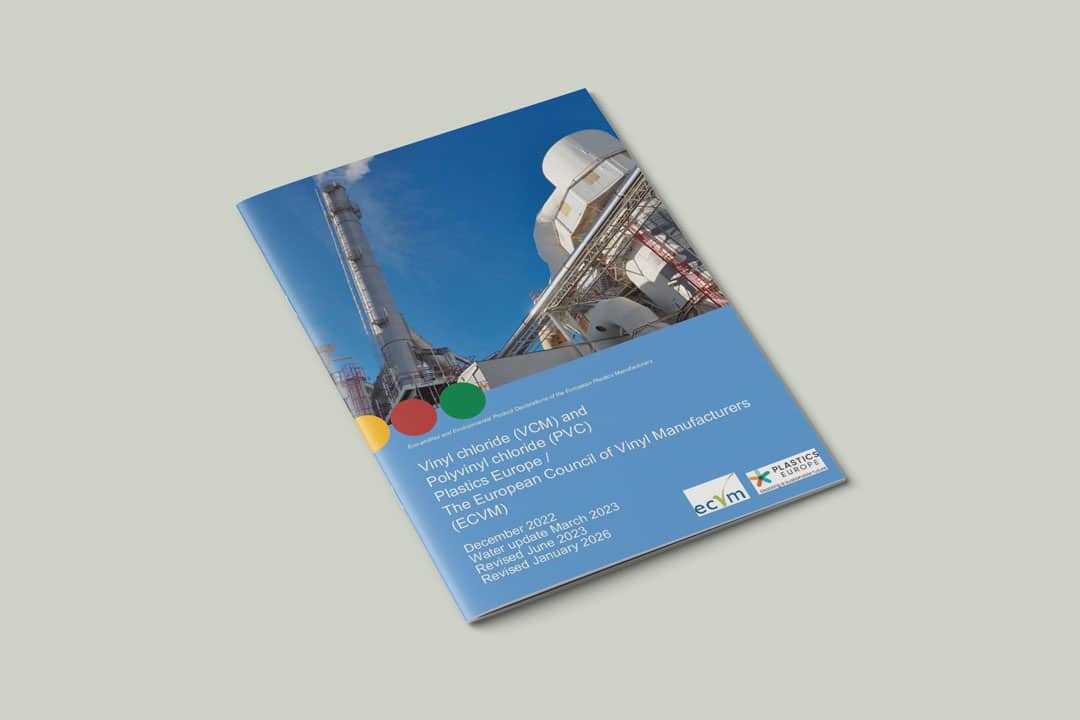
Life Cycle Data for PVC
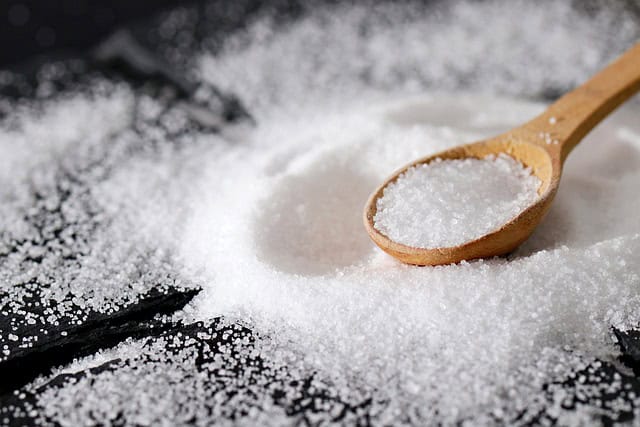
Reliable Life Cycle Inventory (LCI) data is essential for accurate Life Cycle Assessments (LCAs). Plastics Europe’s Eco-profile shows that PVC production is comparatively energy-efficient. Because PVC is 57% chlorine from common salt, it requires significantly less hydrocarbon feedstock than many other plastics.
The combined process and feedstock energy for suspension PVC – the most typically produced type of PVC – is around 60 MJ/kg, which is lower than that of many alternatives, making PVC one of the more resource-efficient materials at the production stage.
Eco-profiles
Eco-profiles are cradle-to-gate studies that measure the environmental impacts of production up to the factory gate. They provide the detailed LCI data that underpins the Environmental Product Declaration.
The Eco-profiles of PVC were fully updated in 2022, with a water update in 2023 and a revised edition in January 2026. Data was collected from 39 plants across Europe, covering 68% of Vinyl Chloride Monomer (VCM), 73% of suspension PVC (S-PVC) and 81% of emulsion PVC (E-PVC) production capacity.
The last version was developed by:
- using same plant data of 2021 for VCM/PVC (as in the 2023 update)
- using background data (energy, transport) for Oil & Gas from ecoinvent 3.11 (Nov 2024), including methane emissions satellite data from the International Energy Agency of 2022 (only as sensitivity case in the 2023 update)
- running carbon footprint sensitivity analysis by applying two types of steam cracker allocation:
- "Main Products" as recommended in the Plastics Europe's eco-profile methodology (v3.1)
- "All Products"
Download ILCD-compliant LCI datasets for VCM, S-PVC and E-PVC.
Environmental Product Declaration (EPD)
The EPD translates the Eco-profile into a standardised, verified format that communicates the environmental performance of PVC production. It follows Plastics Europe’s Eco-profile methodology (version 3.1) and has undergone independent external review.
The EPD includes indicators such as greenhouse gas emissions, energy use, water use and other impact categories. It is designed for use by:
- PVC producers in product-oriented environmental management
- Downstream users conducting LCA studies of finished products
- Stakeholders seeking transparent, verified sustainability data
It is important to note that EPDs do not allow direct material-to-material comparisons. Such assessments must always be made at the application level, taking into account the full life cycle.